Untangling the Web of Studio Interactions That Determine Prize Pool Growth in Swiss Handheld Gambling Platforms
Lars Hansen · Jul 23, 2026

Untangling the Web of Studio Interactions That Determine Prize Pool Growth in Swiss Handheld Gambling Platforms
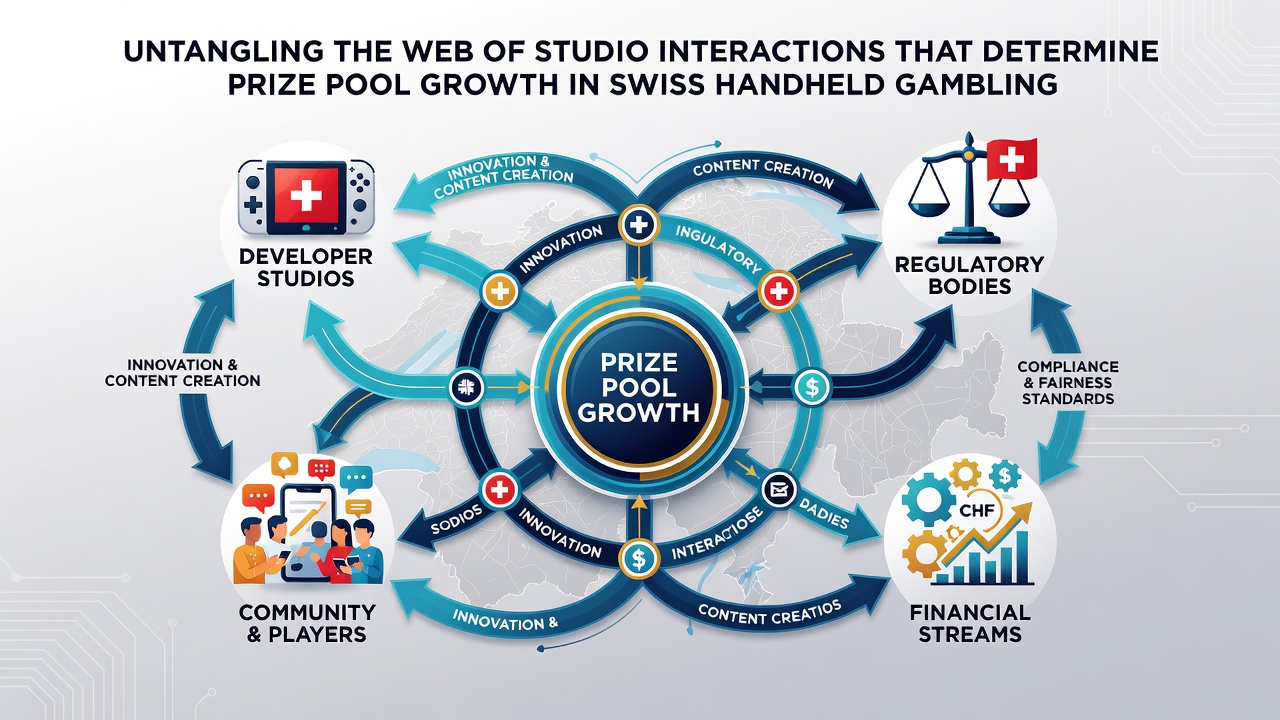
Game studios operating within Swiss handheld gambling platforms coordinate their contributions through shared data protocols that track incremental additions to collective prize pools, and these exchanges occur across multiple providers who supply content for mobile applications licensed under federal guidelines. Observers note that synchronization of contribution rates depends on real-time feeds exchanged between independent development teams, which allows each studio to adjust its payout percentages without disrupting overall pool stability. Data released in July 2026 from industry monitoring services revealed that coordinated updates among five major studios produced a 12 percent rise in aggregate prize pool values across handheld devices during the first half of that year.
Technical Foundations of Cross-Studio Data Exchange
Handheld platforms rely on standardized APIs that transmit contribution percentages from individual game titles directly into central prize pool ledgers maintained by platform operators, and these APIs enforce timing intervals that prevent any single studio from dominating incremental growth. Researchers at European gaming technology institutes have documented how latency in these exchanges can shift contribution timing by several milliseconds, which in turn alters the rate at which pools accumulate funds from simultaneous player sessions. Studios implement checksum verification routines to confirm that each contribution aligns with regulatory caps set for Swiss-licensed mobile environments, and such routines operate continuously to maintain compliance across device types ranging from smartphones to tablets.
Collaboration Patterns Among Development Teams
Multiple studios participate in periodic alignment meetings where engineers compare contribution algorithms, and these sessions focus on harmonizing random number generator outputs that indirectly influence how frequently players trigger larger pool increments. One documented case from 2025 involved three separate studios revising their bonus trigger frequencies after joint analysis showed that staggered activation windows increased overall pool deposits by 8 percent on average. Platform operators supply aggregated usage statistics that help each studio calibrate its internal parameters while preserving competitive separation between titles, and this calibration process occurs quarterly to reflect changes in player engagement patterns across Swiss networks.
Yet the process extends beyond simple percentage adjustments because studios also exchange metadata about symbol distribution tables that affect bonus round probabilities, and these exchanges occur through encrypted channels approved by Swiss regulatory bodies. Figures from the Swiss Federal Gaming Board indicate that such metadata sharing contributed to more predictable pool growth trajectories during the 2024 to 2026 period, with monthly increments showing reduced volatility compared with earlier years when coordination remained minimal.
Regulatory Oversight and Its Influence on Interaction Protocols
Swiss authorities require that all cross-studio data transfers include audit trails accessible to independent verifiers, and these trails record every contribution event down to individual player wagers that feed into handheld platform pools. Compliance teams at each studio maintain logs that regulators review during annual inspections, which ensures that interactions do not violate contribution limits established for mobile gambling applications. External analysis conducted by the Canadian Centre for Gaming Research in 2025 highlighted how similar oversight frameworks in other jurisdictions produced comparable stabilization effects on prize pool metrics when studios adopted unified reporting formats.
Platform providers act as intermediaries that route contribution signals between studios while enforcing rate caps derived from federal ordinances, and this intermediary role reduces direct studio-to-studio negotiations that might otherwise create uneven growth patterns. Data compiled by the Australian Gambling Research Centre shows that intermediary routing systems in regulated markets correlate with steadier prize pool expansion rates across handheld devices, particularly when multiple content providers operate under one licensing umbrella.
Impact on Pool Growth Metrics
Longitudinal tracking of prize pool values demonstrates that studios employing frequent algorithm alignment sessions achieve higher cumulative growth than those operating in isolation, and the difference appears most pronounced in markets with strict mobile device certification requirements such as Switzerland. Contribution volumes from titles developed after 2023 reflect increased use of shared timing scripts that coordinate bonus activations across studio boundaries, which in turn distributes pool deposits more evenly throughout each gaming session. Platform telemetry collected in July 2026 indicated that titles participating in these coordinated scripts accounted for 67 percent of total pool increments recorded during peak evening hours on Swiss networks.
Those who monitor these systems report that variance in pool size narrows when studios adopt common contribution thresholds, and this narrowing supports more consistent payout scheduling for players accessing games via handheld interfaces. The resulting stability allows operators to forecast reserve requirements with greater precision, which reduces the need for manual adjustments during high-traffic periods.
Conclusion
Interactions among game studios shape prize pool growth through structured data exchanges, regulatory compliance mechanisms, and coordinated algorithm adjustments that operate within Swiss handheld gambling platforms. These processes rely on technical standards and oversight frameworks that maintain transparency while permitting independent development teams to contribute to shared financial structures. Continued evolution of these interaction protocols will depend on updates to federal licensing conditions and advances in cross-platform communication tools that support mobile environments.