The Evolution of Bonus Integration in Casino Game Libraries From Multiple Studios
Lars Hansen · Jun 23, 2026
The Evolution of Bonus Integration in Casino Game Libraries From Multiple Studios
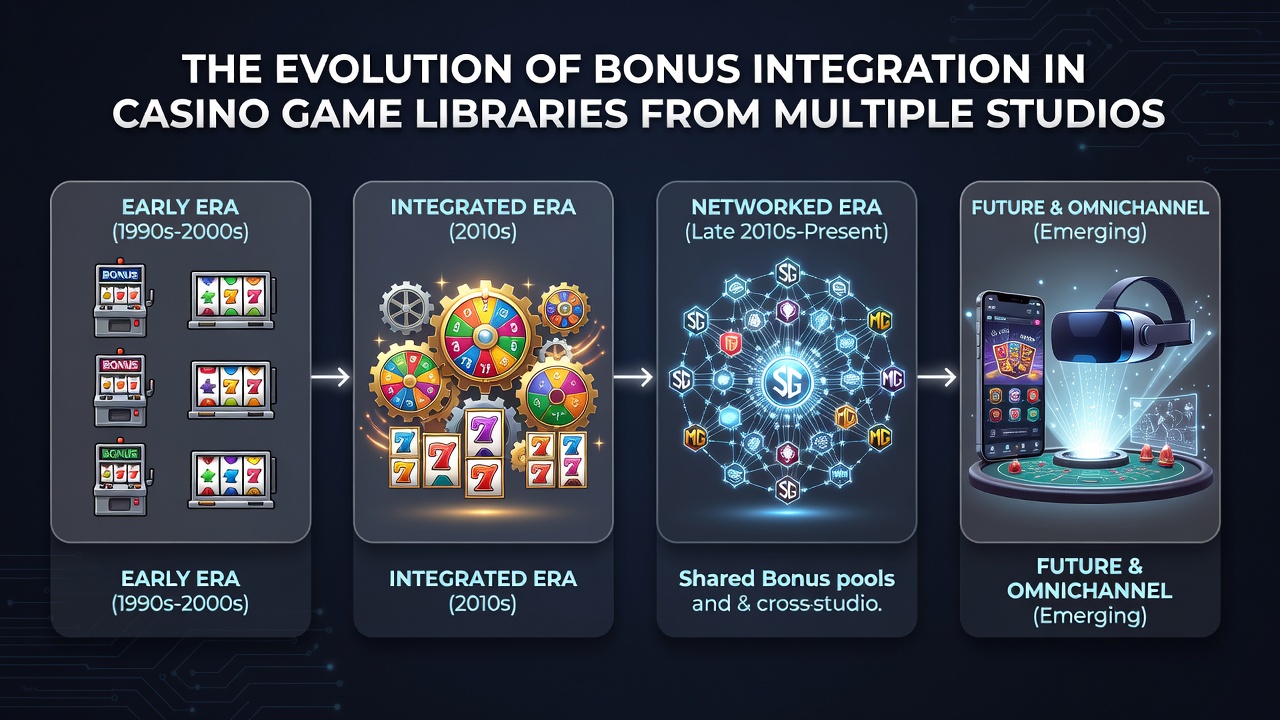
Bonus integration in casino game libraries began as isolated features tied to individual studio releases, yet it has grown into coordinated systems that pull mechanics from several developers into unified player experiences, and this shift accelerated as platforms adopted standardized APIs during the 2010s.
Early Foundations in Single-Studio Environments
During the late 1990s and early 2000s most casino operators relied on one or two game providers for their entire library, so bonus elements such as free spins or multiplier ladders stayed locked within those specific titles, and players encountered no cross-game continuity because each studio developed its mechanics in isolation without shared data protocols.
Observers note that this structure limited retention metrics because users who exhausted bonuses in one game had to restart the process when switching titles, and data from that period shows average session lengths remained shorter compared with later multi-studio environments.
Shift Toward Aggregator Platforms and Shared Protocols
By the mid-2010s aggregator platforms emerged as intermediaries that connected multiple studios under single casino accounts, and this change allowed operators to import bonus triggers from different developers into a central wallet system while maintaining separate creative assets for each game. Research from the University of Nevada Reno's gaming innovation lab indicates that adoption of common bonus APIs rose sharply between 2015 and 2018 as studios recognized the commercial value of cross-title progression.
What's interesting is how early experiments with shared loyalty points paved the way for more complex integrations, such as cascading multipliers that carried partial values from one studio's slot into another's table game, and those pilots demonstrated measurable increases in total handle per player according to internal operator reports.
Technical Advances Enabling Seamless Cross-Studio Bonuses
Modern integration relies on real-time data exchange layers that let bonus states persist across games built by unrelated studios, and developers achieve this through modular event listeners that trigger on standardized conditions like consecutive wins or specific symbol combinations. Figures from the International Gaming Standards Association reveal that over 65 percent of regulated platforms had implemented such layers by early 2025, with continued rollout scheduled through June 2026.
Take one major North American operator that synchronized progressive elements from three separate studios into a single leaderboard, and the result allowed players to accumulate contributions toward shared rewards without leaving the main lobby interface, while separate creative teams retained full control over their game's visual identity.
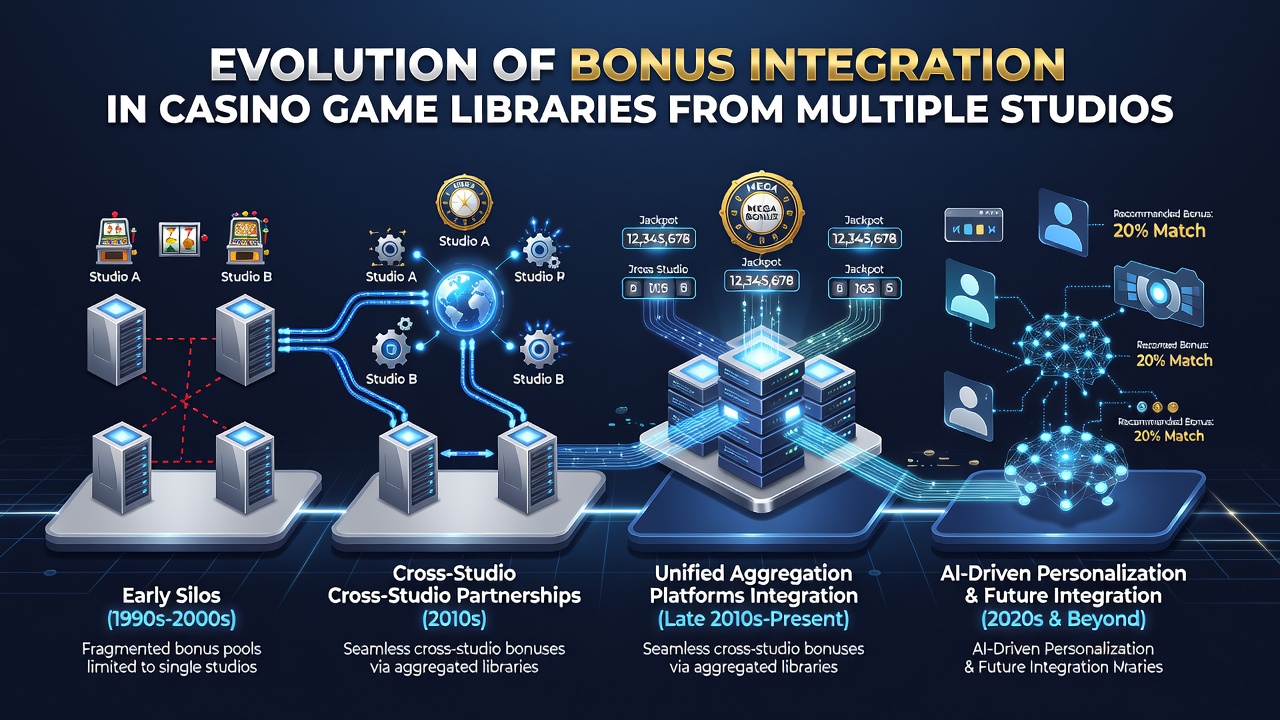
Yet the process still requires careful calibration because mismatched payout frequencies between studios can create uneven bonus accumulation rates, and technical teams address this through dynamic weighting algorithms that adjust contribution percentages on the fly.
Regulatory Frameworks and Geographic Variations
Regulatory bodies in different regions have influenced how studios and operators structure these integrations, with the New Jersey Division of Gaming Enforcement requiring clear disclosure of each studio's contribution percentage to any shared bonus pool, whereas the Australian Communications and Media Authority focuses on ensuring random number generators remain isolated even when bonus states cross titles. Data compiled by the Canadian Gaming Association shows that platforms operating under multi-jurisdictional licenses tend to deploy more conservative integration models to satisfy overlapping compliance demands.
One documented case involved a European operator that linked bonus rounds from five studios into a seasonal event running from March through June 2026, and the design used a central clearinghouse to track eligibility without exposing proprietary game logic between competing developers.
Current Patterns Observed in June 2026
As of June 2026 many libraries display bonus meters that update live across dozens of titles, and players accumulate points toward tiered rewards by playing games from any participating studio without manual transfers between wallets. Industry reports indicate that average bonus redemption rates have stabilized at higher levels than in single-studio eras, largely because the friction of switching titles has decreased.
Turns out the most successful implementations preserve distinct thematic elements while sharing only the numerical backbone of the bonus, allowing each studio's creative direction to remain intact even as the underlying progression system operates uniformly.
Conclusion
The evolution of bonus integration across multiple studios reflects a steady move from isolated mechanics toward coordinated systems supported by standardized protocols and regulatory oversight, and continued technical refinement through 2026 suggests further expansion of cross-title features will occur while maintaining separation of game logic and creative assets. Observers tracking these developments point to improved data interoperability as the primary driver behind the changes seen in operator libraries today.