Swiss Regulatory Shifts Impact Cross-Provider Bonus Layering in Mobile Jackpot Systems
Lars Flores · Jul 2, 2026
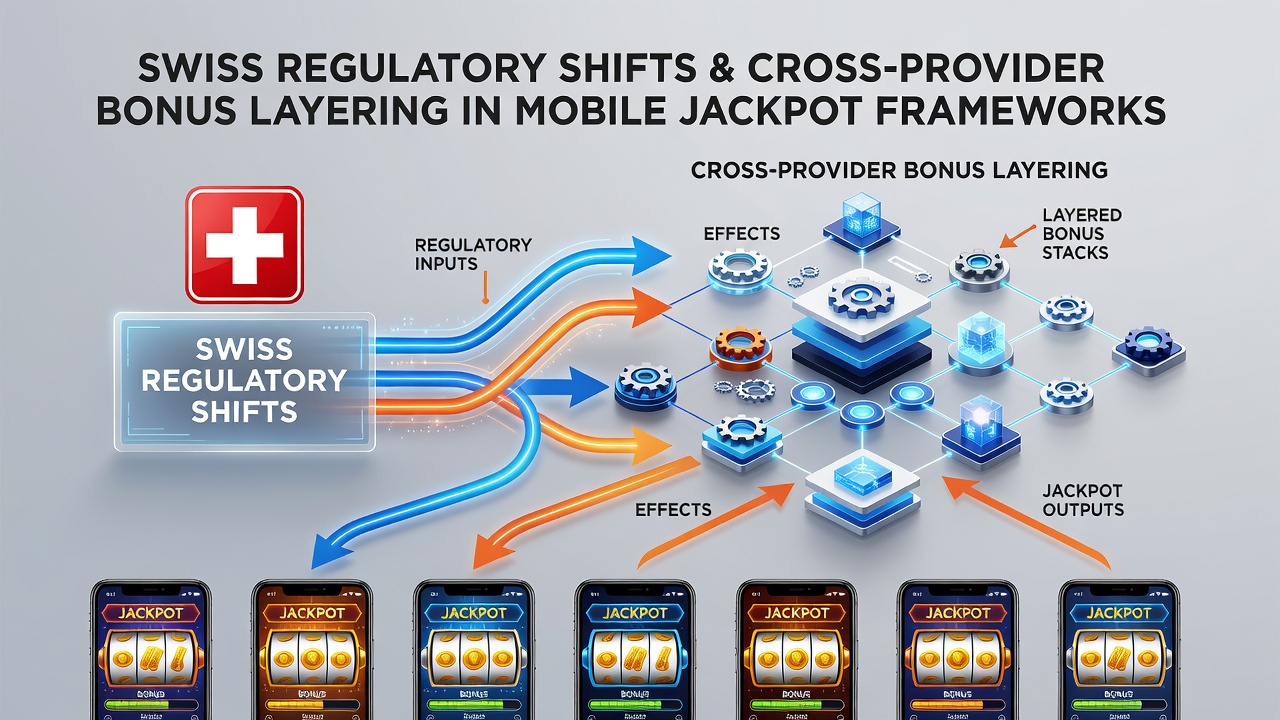
Swiss Regulatory Shifts Impact Cross-Provider Bonus Layering in Mobile Jackpot Systems
Switzerland has implemented several regulatory adjustments in its online gambling sector since the Federal Act on Gambling took full effect, and observers note that these changes continue to reshape how operators handle cross-provider bonus structures within mobile jackpot networks. Data from the Swiss Federal Office of Justice indicates that compliance requirements tightened further in early 2025, which set the stage for additional clarifications expected to take hold by July 2026.
Key Regulatory Updates and Timeline
Amendments focus on transparency in jackpot contributions and restrictions on how bonuses from different game studios accumulate toward shared progressive pools, and researchers at the University of Zurich have documented how these rules affect multi-provider ecosystems. The Swiss Gambling Supervisory Authority has required detailed reporting on bonus allocation formulas, which forces platforms to separate contributions from each studio rather than allowing seamless layering across titles developed by independent teams.
July 2026 marks the deadline for full implementation of updated guidelines on mobile-specific jackpot mechanics, and figures from industry reports reveal that operators must demonstrate clear separation between bonus triggers originating from one provider and those managed by another. This separation prevents automatic stacking that previously allowed players to combine promotions from multiple sources into a single jackpot entry.
Effects on Cross-Provider Bonus Layering
Operators have responded by redesigning their mobile frameworks so that bonus credits from one studio do not automatically feed into jackpot pools managed by a second provider, and case studies compiled by European gaming associations show a measurable decline in layered bonus usage since the initial 2025 announcements. Platforms now route each provider's contributions through isolated ledgers, which reduces the risk of non-compliance while maintaining the integrity of progressive jackpots.
Those who've studied the technical adjustments note that mobile apps must now display real-time attribution of every bonus segment, and this requirement stems directly from the need to prevent unintended cross-studio accumulation. One documented adjustment involves tagging each bonus unit with its originating provider identifier, which the system then uses to calculate eligibility for shared jackpots without merging contributions improperly.

Impact on Mobile Jackpot Frameworks
Mobile jackpot systems in Switzerland rely on interconnected networks that span multiple game studios, yet new rules limit how bonuses interact across those connections. Reports from the Canadian Gaming Association highlight similar challenges in other regulated markets, where providers adopted segmented tracking to maintain compliance without disrupting player engagement. Swiss operators have followed comparable patterns by implementing modular jackpot modules that isolate bonus inputs according to provider origin.
What's interesting is how these modular designs allow continued growth of jackpots while satisfying transparency mandates, and data indicates that average jackpot sizes have remained stable even as layering restrictions tightened. Providers achieve this by routing only verified, non-layered funds into the main pool, which preserves the mathematical integrity of progressive mechanics.
Industry Adaptations and Reporting Requirements
Game studios operating within Swiss platforms now submit separate contribution reports for each mobile title, and this practice emerged after regulators clarified that aggregated bonus data no longer suffices for oversight purposes. Academic papers published through Australian research institutions on multi-jurisdictional gambling systems describe how such granular reporting helps authorities detect patterns that could indicate improper cross-provider interactions.
Platforms have introduced automated compliance checks within their mobile frameworks to flag any attempt at unauthorized bonus merging before it reaches the jackpot calculation stage. These checks operate in real time and draw on provider-specific metadata to enforce separation, which aligns with the July 2026 enforcement window.
Conclusion
Swiss regulatory shifts continue to drive structural changes in how cross-provider bonus layering functions inside mobile jackpot frameworks, and the July 2026 implementation date provides operators with a clear target for full compliance. The combination of isolated ledgers, provider-tagged contributions, and mandatory reporting has produced measurable adjustments across the sector without eliminating the appeal of shared progressive systems. Those monitoring these developments observe that the emphasis remains on transparency and separation rather than outright prohibition of multi-studio networks.