Swiss Provider Tactics for Merging Progressive Jackpots with Mobile Bonus Triggers Across Multiple Game Studios
Lars Hansen · Jun 13, 2026
Swiss Provider Tactics for Merging Progressive Jackpots with Mobile Bonus Triggers Across Multiple Game Studios
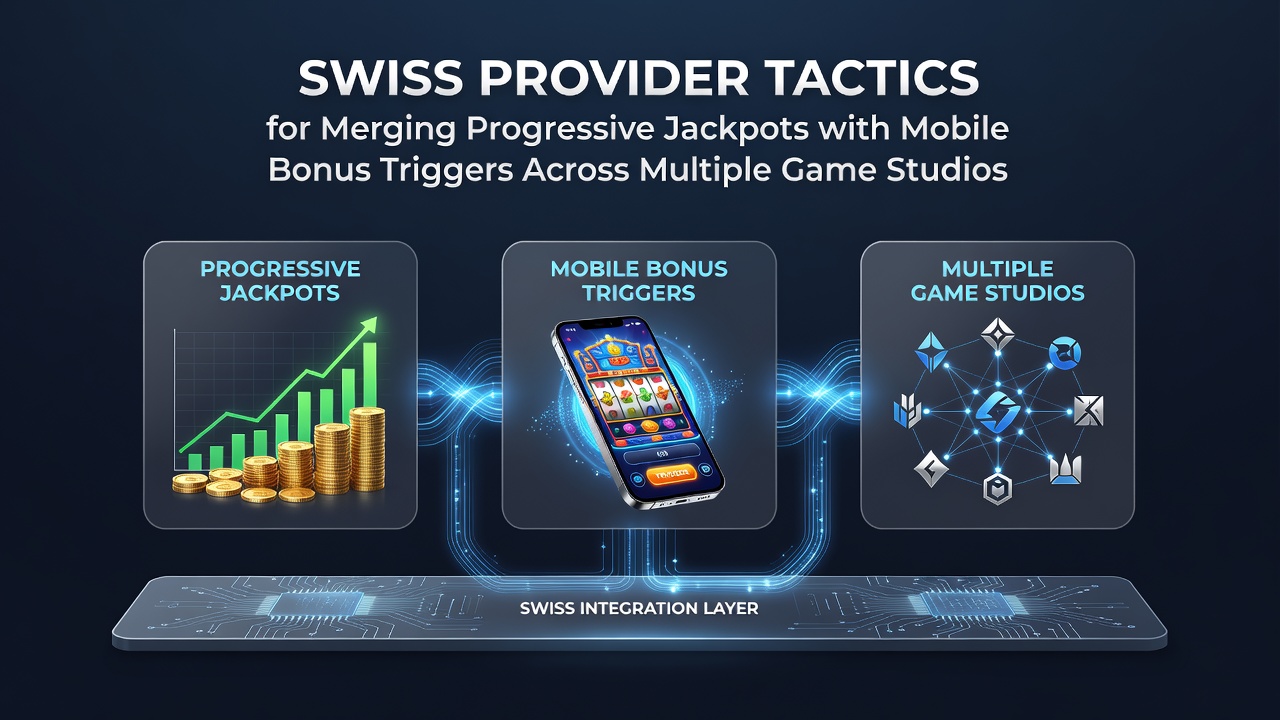
Swiss providers have developed specific methods to combine progressive jackpot systems with mobile bonus mechanisms that operate across several independent game studios at once. These approaches rely on shared data protocols and synchronized trigger events that activate during regular mobile play sessions, allowing jackpot contributions to accumulate while players meet bonus conditions through spins and deposits. Data from industry reports shows that such integrations have expanded in regulated markets since 2024, with Switzerland maintaining strict oversight through its federal gaming framework.
Core Integration Methods Used by Providers
Providers connect jackpot meters to bonus activation sequences by routing all mobile game events through centralized servers that track contributions in real time. One common tactic involves embedding API calls within each studio's slot framework so that every qualifying spin adds a fixed percentage to the progressive pool while simultaneously advancing a separate bonus meter visible on the player's device. This dual tracking occurs without interrupting gameplay flow, and operators report that the process maintains compliance with Swiss payout verification requirements because all transactions route through licensed payment gateways.
Multiple studios participate by adopting a standardized event schema that defines jackpot increments and bonus trigger thresholds in identical formats. When a player completes a mobile deposit, the system checks both the jackpot contribution history and the bonus eligibility criteria in a single query, then applies any unlocked features or pool additions accordingly. Researchers at European gaming research centers have documented how these schemas reduce latency issues that previously arose when studios operated separate tracking systems.
Cross-Studio Data Sharing Protocols
Effective merging requires secure data exchange between competing development teams while preserving individual game mechanics. Providers establish private networks that transmit only aggregated contribution amounts and trigger confirmations rather than full player profiles, which satisfies Swiss data protection rules. By June 2026, several major operators had adopted blockchain-based ledgers to log these exchanges, creating immutable records that regulators can audit without accessing proprietary code from each studio.

One documented case involved three studios pooling resources for a shared progressive title where mobile bonus rounds contributed directly to the meter. The protocol defined clear contribution percentages per bet size and required each studio to implement identical confirmation handshakes before any bonus feature could release funds from the pool. Figures from the Swiss Federal Office of Justice indicate that such multi-studio arrangements increased average jackpot sizes by measurable margins while keeping individual game return-to-player rates within permitted ranges.
Mobile-Specific Trigger Design
Bonus triggers designed for mobile devices incorporate location verification and session duration checks that align with Swiss licensing conditions. Providers configure these triggers to activate only after a player has placed a minimum number of bets across titles from different studios, ensuring the jackpot pool receives contributions from varied sources before any payout occurs. The system logs each trigger event with timestamps and device identifiers, allowing operators to demonstrate fairness during routine compliance reviews.
Additional layers include time-based multipliers that increase contribution rates during peak mobile usage hours, which data from Canadian gaming association studies shows can stabilize jackpot growth patterns. Swiss providers have adapted similar timing logic while adding mandatory cooling periods between bonus activations to prevent excessive play sessions, a requirement enforced under national regulations.
Regulatory Alignment Across Jurisdictions
Because Swiss casinos must operate under federal concession rules, providers embed jurisdiction-specific flags within the integration code so that mobile bonus triggers adjust automatically when players access games from different regions. This approach allows the same jackpot pool to serve Swiss users under one set of contribution rules and international users under another, provided all activity routes through the licensed Swiss platform. Reports from the European Gaming and Betting Association highlight how these adaptive flags have become standard in multi-jurisdiction deployments.
Testing protocols require independent verification that jackpot increments match the declared percentages across all connected studios. Auditors examine sample mobile sessions to confirm that bonus triggers do not alter the underlying random number generation used for jackpot determinations, maintaining the integrity demanded by Swiss authorities.
Conclusion
Swiss providers continue refining these merging tactics through ongoing collaboration with game studios and regulatory bodies. The combination of shared protocols, mobile-optimized triggers, and audited data exchanges supports larger progressive pools while meeting compliance standards that govern online casino operations in Switzerland. As technology evolves, the same foundational methods are expected to support expanded integrations across additional studios in the coming years.