How Regional Player Habits Steer Collaborative Reward Mechanics Among Competing Developers in Swiss Handheld Casino Ecosystems
Lars Hansen · Aug 13, 2026

How Regional Player Habits Steer Collaborative Reward Mechanics Among Competing Developers in Swiss Handheld Casino Ecosystems
Swiss handheld casino platforms operate under tight federal oversight, and player habits in specific cantons shape how competing developers coordinate reward structures. Data from August 2026 shows distinct patterns in session timing, preferred bonus triggers, and game selection between German-speaking and French-speaking regions, prompting studios to align certain mechanics even while they compete for market share.
Mapping Regional Play Patterns
Observers tracking mobile gambling activity note that users in Zurich and Basel tend toward shorter evening sessions focused on quick bonus rounds, whereas players in Geneva and Lausanne extend play during midday periods with greater emphasis on progressive reward ladders. These differences emerge from commuting habits, language preferences in interface design, and local marketing that highlights particular features. Developers monitor aggregated anonymized data to identify where reward frequency needs adjustment to match these behaviors.
Studies compiled by the Swiss Federal Gaming Board indicate that cross-canton variations in average bet size and game duration directly influence decisions about shared jackpot contributions. When one studio observes sustained engagement in a particular reward tier within Romandy, it often initiates technical discussions with rivals to standardize timing parameters across multiple titles.
Mechanics of Developer Collaboration
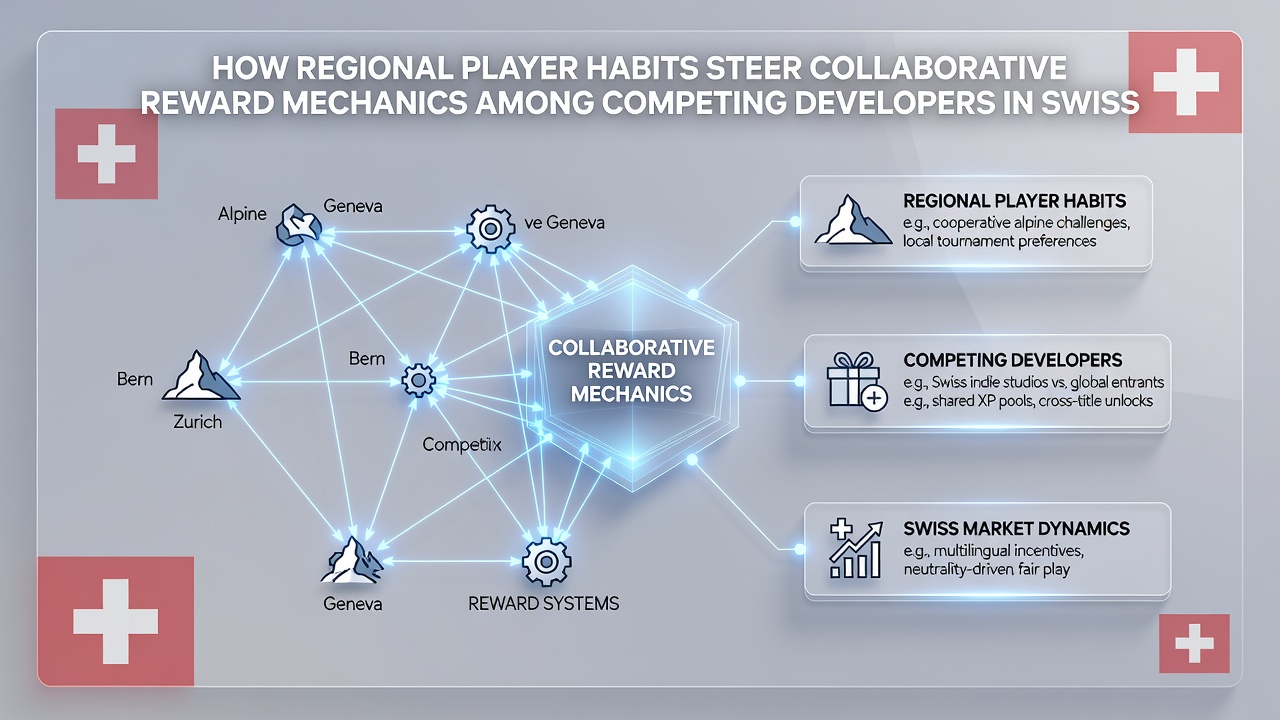
Competing studios maintain separate creative teams yet participate in joint working groups that define interoperability standards for bonus pools. Regional habits drive these conversations because uniform mechanics fail to retain users across linguistic borders. For instance, when data reveals higher activation rates for mystery prize features among Ticino players, developers adjust trigger probabilities collectively rather than duplicating isolated implementations.
Technical frameworks allow real-time synchronization of reward eligibility without revealing proprietary algorithms. This approach lets each company retain distinctive reel layouts while ensuring that player progress in one title contributes to shared outcomes visible across partner platforms. The result appears in elevated retention metrics reported during the first half of 2026.
Data Sharing and Standardization Efforts
Industry reports from the European Gaming and Betting Association highlight how Swiss operators facilitate limited data exchanges focused solely on reward mechanics. These exchanges occur through secure channels that mask individual user identities yet expose regional preference clusters. Developers then calibrate collaborative elements such as symbol timing or prize escalation rates to accommodate observed habits without compromising competitive positioning.
One documented case involves three major studios aligning their bonus scaling algorithms after regional analytics showed consistent player drop-off when reward intervals exceeded eight minutes in certain cantons. The adjustment produced measurable increases in session completion rates across platforms by late summer 2026.
Regulatory Context and Future Trajectories
Swiss licensing conditions require transparent reporting of any coordinated mechanics, which encourages developers to document how regional habits justify specific collaborations. This documentation process reveals patterns that feed back into design iterations. Academic research from institutions such as the University of Zurich continues to examine these interactions, supplying additional datasets that studios incorporate into planning cycles.
Trends observed through August 2026 suggest continued refinement of cross-studio reward layers as mobile usage grows in previously underrepresented areas. Developers maintain competitive separation in visual and narrative elements while converging on backend reward coordination that reflects localized play rhythms.
Conclusion
Regional player habits in Switzerland continue to function as a steering mechanism for collaborative reward design among competing handheld casino developers. Through structured data analysis and standardized technical interfaces, studios translate observed behavioral differences into aligned mechanics that sustain engagement across diverse cantons. This process operates within established regulatory boundaries and draws on ongoing research inputs that keep coordination responsive to shifting patterns.