How Localization Efforts Shape Game Design Choices for the Swiss Market
Ben Flores · Jul 18, 2026
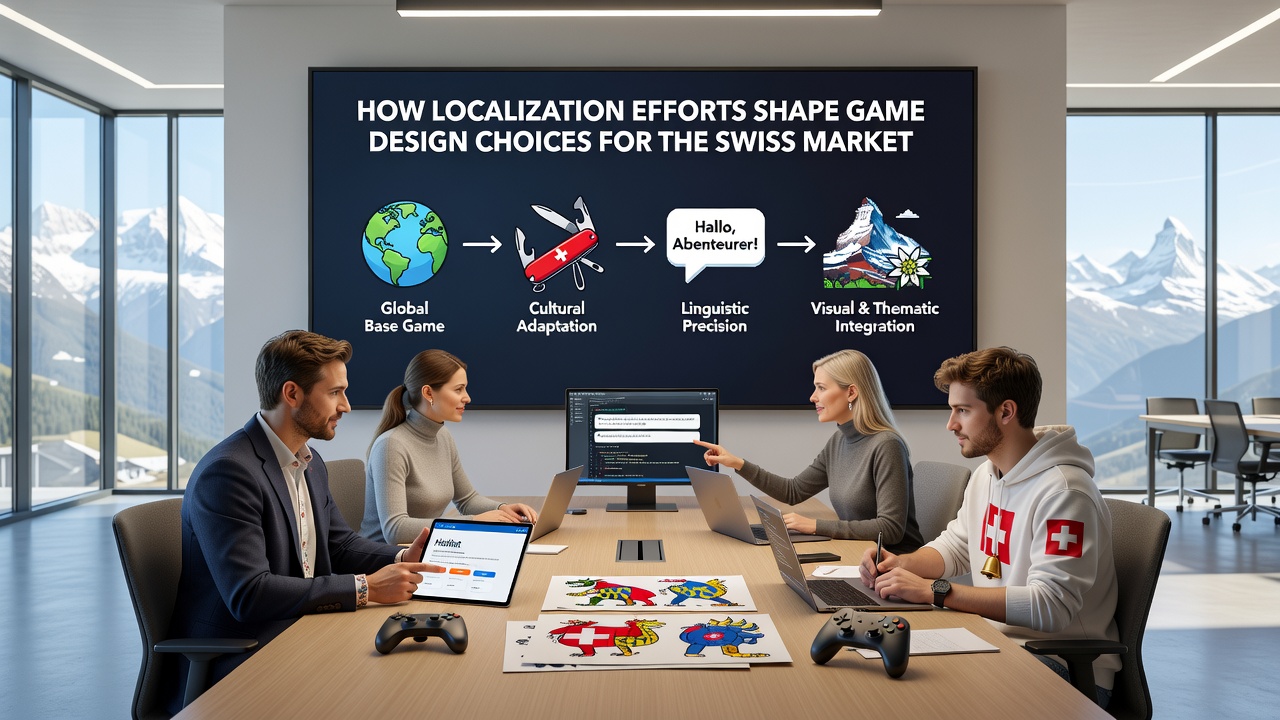
How Localization Efforts Shape Game Design Choices for the Swiss Market
Switzerland presents distinct challenges for game developers because of its four official languages and varied cultural regions, which forces teams to integrate localization planning from the earliest design stages rather than treating it as a post-production step. Game studios that target the Swiss market must build flexible systems for text, audio, and visual assets so that German, French, Italian, and Romansh versions fit without breaking layouts or pacing. Developers often create modular code structures that allow dynamic resizing of interface elements, since German terms frequently run longer than their French or Italian equivalents, and this affects everything from menu widths to subtitle timing in cutscenes. Research from the University of Melbourne's Digital Games Research Centre shows that projects incorporating such modular design from the outset reduce post-localization bugs by measurable margins compared with retrofitted approaches.Language Architecture and Narrative Branching
Designers adjust story branches and dialogue trees to accommodate multiple language tracks while maintaining consistent emotional impact across regions, which means writing original scripts with shorter sentence structures that translate cleanly without losing nuance. Voice recording schedules expand significantly because Swiss players expect native-level dubbing rather than subtitles alone, and studios coordinate recording sessions in Zurich, Geneva, and Lugano to capture regional accents where relevant. Data from the European Commission's 2025 Digital Content Accessibility Report indicates that titles offering full audio localization in all three main Swiss languages achieve higher completion rates among domestic users than those relying on text-only adaptations.
Cultural and Regulatory Adaptations
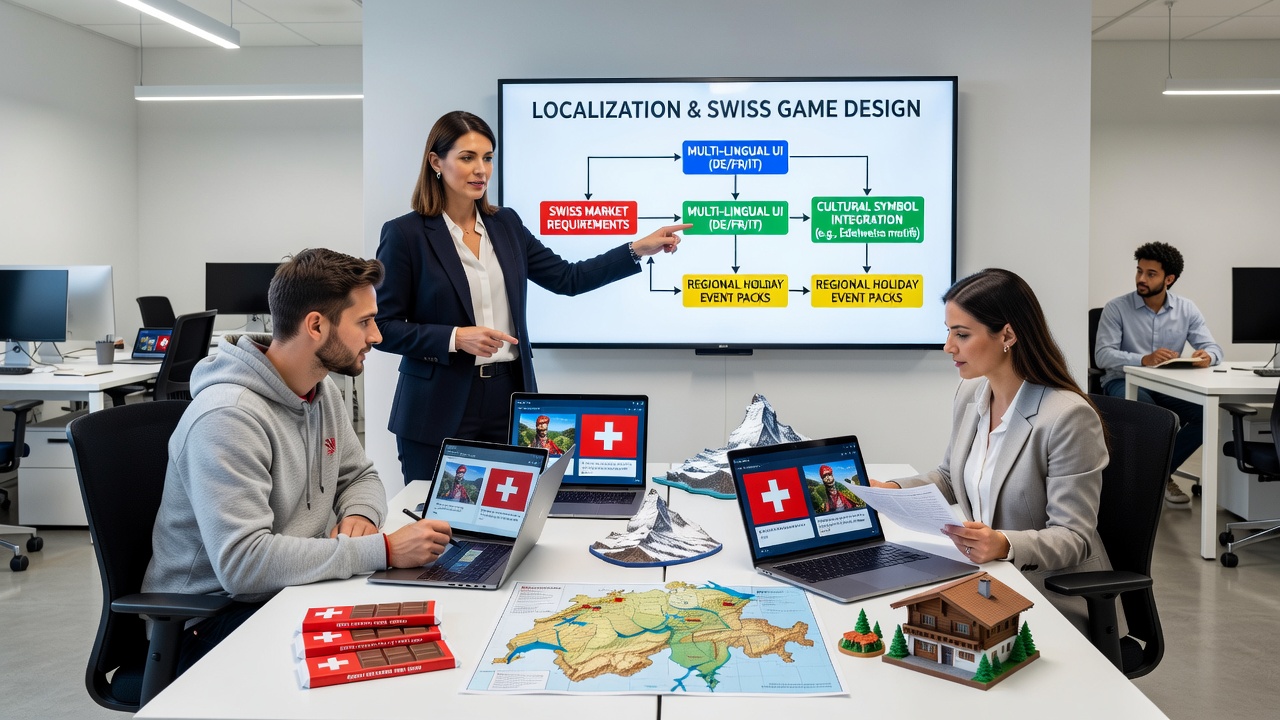
Visual and thematic choices also shift under localization pressure, as developers remove or replace symbols that carry unintended meanings in Swiss cantons while adding neutral references that resonate locally without alienating any linguistic group. Content moderation teams review historical or religious imagery against guidelines from the Swiss Federal Office of Communications, and this process influences character customization options as well as environmental storytelling details. Legal frameworks around data privacy and consumer protection further shape backend systems, requiring clear consent flows and region-specific age rating displays that integrate directly into the onboarding sequence rather than appearing as separate screens.
Technical Implementation and Asset Management
Asset pipelines grow more complex when supporting multiple currencies, date formats, and measurement units alongside language variants, so programmers embed conditional logic that swaps these elements based on device settings detected at launch. Audio compression techniques receive extra attention because four simultaneous language packs must fit within typical mobile data limits, prompting designers to record shorter voice lines and reuse ambient sound beds across versions. Observers note that studios adopting unified asset management platforms early in development maintain tighter control over file sizes while preserving audio quality for Swiss releases.
Market-Specific Feature Adjustments
Feature sets sometimes change to align with Swiss preferences for privacy controls and offline functionality, since connectivity varies across mountainous regions and users often prioritize data-efficient play sessions. Developers add toggles for regional leaderboards that respect data protection rules, and these options appear in the core settings menu instead of hidden submenus. A July 2026 update to digital service requirements is expected to standardize how in-game purchases display pricing across language zones, which will require additional interface layers that developers are already prototyping in current projects.
Collaboration Patterns Across Studios
Teams frequently partner with Swiss-based localization specialists who provide ongoing feedback during playtesting phases, allowing designers to refine mechanics that might otherwise feel awkward in one language or another. This iterative loop affects control schemes as well, since button prompts must remain intuitive when labels shift between languages with different word lengths. Industry reports from the Australian Interactive Games Association document similar patterns in other multilingual markets, confirming that early involvement of local experts correlates with smoother certification processes and fewer post-launch patches.
Conclusion
Localization for the Swiss market therefore influences core design decisions around architecture, narrative structure, visual content, and technical systems from the initial concept phase onward. Studios that embed these considerations throughout development produce versions that feel native to each linguistic region while meeting regulatory standards that continue to evolve through 2026 and beyond. The result is a more deliberate production process that prioritizes flexibility without compromising teh original creative vision.