Demographic Insights Guiding Jackpot and Bonus Configurations in Swiss-Approved Mobile Casino Titles
Drew Braun · Jul 21, 2026

Demographic Insights Guiding Jackpot and Bonus Configurations in Swiss-Approved Mobile Casino Titles
Swiss regulators have long required mobile casino operators to align game features with player behavior patterns, and demographic data now drives many decisions around jackpot sizing and bonus triggers in approved titles. Age brackets, regional income levels, and urban versus rural access patterns inform how studios adjust prize pools and reward frequencies before games receive ESBK certification. Providers review anonymized player statistics from licensed platforms to calibrate these elements, ensuring configurations match observed engagement across different population segments.
Age-Based Adjustments in Prize Structures
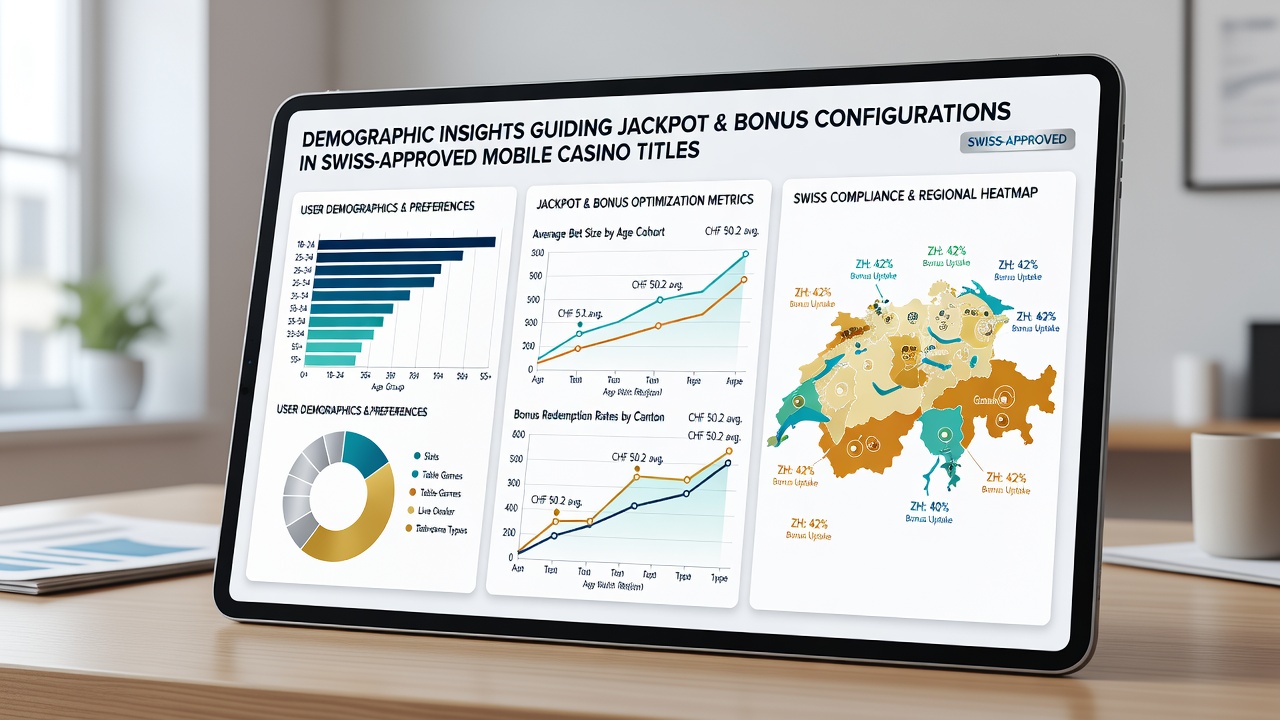
Operators segment player data by age cohorts to determine jackpot tiers, with younger adults showing stronger responses to frequent smaller wins while older groups engage more consistently with larger progressive accumulations. Studies from the Swiss Federal Statistical Office track participation rates across cantons, revealing that users aged 25 to 34 interact with mobile titles featuring rapid bonus cycles at higher volumes than other segments. This leads developers to embed mid-tier jackpots with shorter accumulation periods in games targeted at that demographic, whereas titles popular with players over 45 incorporate slower-building pools that reward sustained play sessions.
Bonus activation rates also reflect these divides, as data indicates that mobile users in the 18 to 24 range complete required reel alignments more readily when free-spin multipliers appear within the first 20 spins. Game studios therefore program higher trigger probabilities for this group, while maintaining stricter sequencing for titles aimed at mid-career professionals who demonstrate patience for layered reward mechanics.
Regional Income and Location Influences
Canton-level income variations further shape how providers structure bonus layers and jackpot eligibility. Urban centers like Zurich and Geneva record elevated average stakes, prompting configurations that scale jackpot contributions proportionally to maintain balanced return-to-player percentages across approved applications. Rural players, by contrast, exhibit steadier but lower-volume activity, which influences the decision to offer localized bonus events tied to deposit thresholds that align with regional spending habits.
According to reports from the European Gaming and Betting Association, cross-border comparisons with markets such as Australia demonstrate similar patterns where location data refines feature deployment. Swiss operators apply these lessons by testing symbol timing and bonus eligibility windows against anonymized location logs before final approval, ensuring mobile platforms deliver consistent experiences regardless of player geography.
Gender and Device Usage Patterns
Gender distribution data collected from licensed mobile platforms shows distinct preferences that affect bonus design. Male players tend toward high-volatility jackpot features, while female cohorts respond more frequently to bonus rounds incorporating narrative elements or collectible symbols. Studios incorporate these observations when sequencing reel mechanics, adjusting the density of special symbols so that activation rates correspond to documented play histories within each segment.
Device preferences add another layer, since tablet users in Switzerland often sustain longer sessions than smartphone players. This leads to configurations where jackpot networks expand contribution rates during extended tablet sessions, whereas mobile-only bonuses reset more quickly to accommodate shorter interaction windows observed in smartphone data logs.
Regulatory Oversight and Data Integration in July 2026
By July 2026, updated compliance guidelines from Swiss authorities emphasized the integration of fresh demographic datasets into pre-launch game reviews. Operators must now submit configuration rationales that cite specific cohort statistics, demonstrating how jackpot growth rates and bonus frequencies align with current player profiles. These requirements build on earlier frameworks but introduce stricter documentation standards for multi-studio collaborations, ensuring progressive systems remain calibrated across different developer libraries.
Research from the University of Lausanne on digital entertainment consumption supports these regulatory shifts, showing that demographic alignment correlates with sustained platform usage in regulated environments. Providers respond by running controlled tests on symbol coordination and prize-pool sharing before submitting titles for certification, reducing variance in bonus eligibility across demographic lines.
Conclusion
Demographic insights continue to refine how jackpot networks and bonus systems operate within Switzerland's mobile casino sector, guiding providers toward configurations that reflect documented player behaviors across age, location, and usage patterns. Regulatory updates effective in 2026 reinforce this data-driven approach, requiring explicit ties between statistical profiles and feature design in every approved title.